Energy efficient custom homes combine a well-sealed building envelope, high performance windows, efficient heating and cooling, and a layout that works with your lot. The smartest time to choose these features is during planning, before the floor plan is final. Changes are simple on paper and costly once framing begins.
If you are planning to build one of the custom homes Adair offers across Arizona, Idaho, Oregon, and Washington, this guide covers the features worth discussing first and how each one affects comfort, indoor air, and daily living.
What Makes Custom Homes Energy Efficient?
An energy efficient home keeps conditioned air inside, limits heat moving through walls and glass, and uses equipment that does its job without wasting power. Three areas work together:
- The envelope: insulation, air sealing, and windows
- The systems: heating, cooling, water heating, and lighting
- The design: orientation, overhangs, and room layout
Custom homes have a real advantage here. Each decision can be tuned to your climate and your land instead of copied from a template.
Why Plan for Efficiency From the Start
Efficiency works best when it is part of the design, not an upgrade added later. A window you move during planning costs very little. The same window moved after framing is a different story. Planning early also lets your builder coordinate the trades so insulation, windows, and mechanical systems work as one package.
Your climate matters too. A home in the Pacific Northwest faces different demands than one in the Arizona desert. Part of the planning process is matching features to where you build. Quality construction also supports long-term comfort and protects the value of your home.
Key Features to Plan For in Energy Efficient Custom Homes
Insulation and Air Sealing
Insulation slows heat flow through walls, floors, and ceilings. Air sealing stops drafts around outlets, framing joints, and openings where pipes and wires pass through. Both matter, and they work best together.
Ask how your walls and attic will be insulated and how air sealing is handled. Insulation choices are part of the options you can review with your Adair team.
High Performance Windows
Windows are a common weak point for heat transfer. Low E coatings reduce the heat that passes through glass, so warm air stays in during winter and cool air stays in during summer. Every Adair home includes Low E Milgard windows.
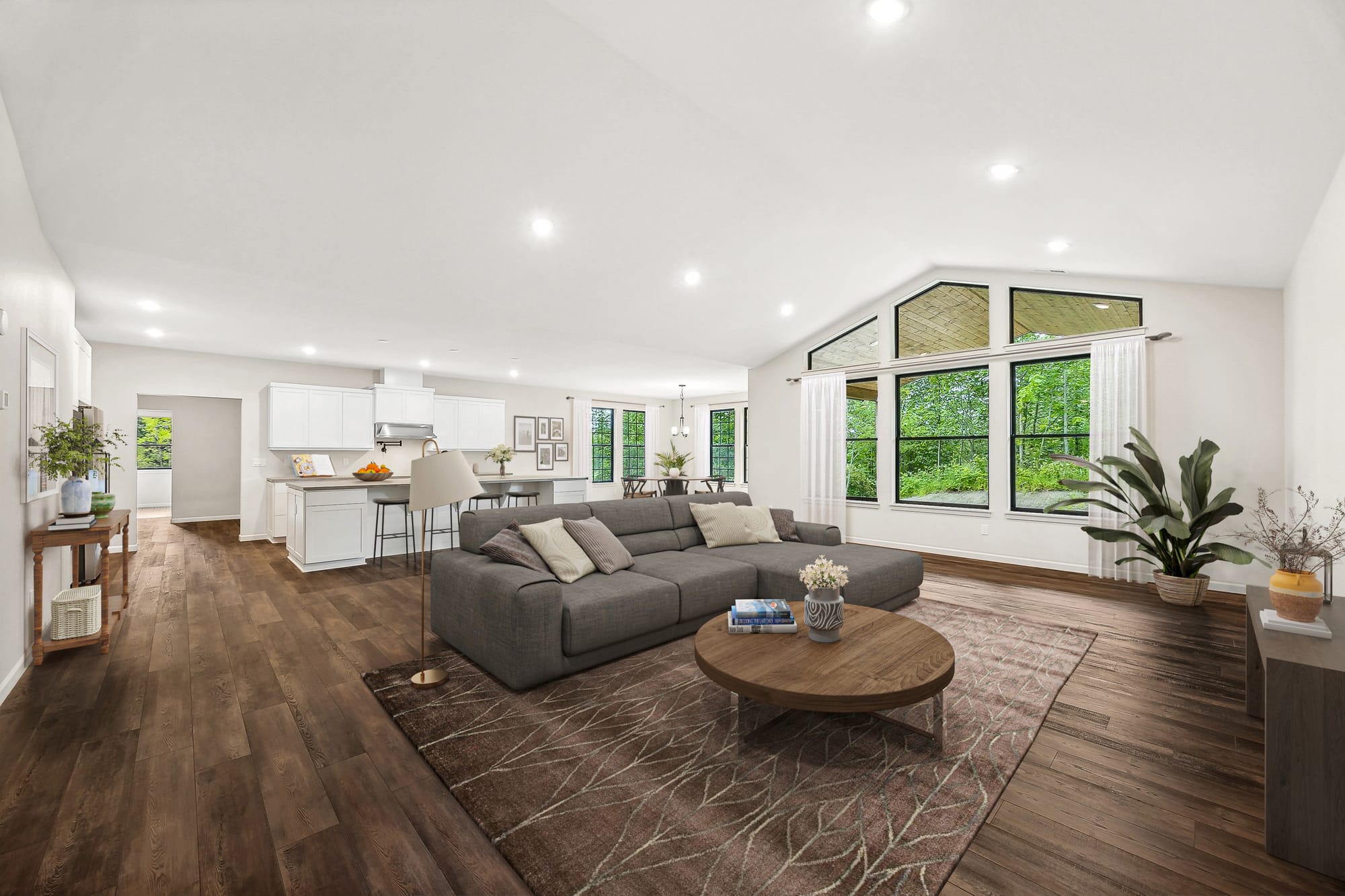
Beyond the glass itself, think about placement. South facing windows can bring in winter light, while shaded west facing windows help in hot climates. Adding or moving a window is one of the simplest ways to shape comfort in your home.
Heating and Cooling
Heat pumps are a popular choice for year round comfort because they move heat instead of creating it. Heat pumps are among the options Adair homeowners can choose.
Whatever system you select, sizing matters. Oversized equipment cycles on and off and wastes energy, while undersized equipment struggles to keep up. Plan ductwork early so runs stay short and sit inside conditioned space wherever possible.
Water Heating, Lighting, and Appliances
Water heating is one of the larger energy uses in a home. During finish selections, ask about efficient water heater options, LED lighting throughout, and appliances with strong efficiency ratings. These choices fit naturally into the stage where you are already picking fixtures and appliances.
Orientation and Layout
How your house sits on the lot changes how it performs. Placing living spaces where they catch daylight, adding roof overhangs to shade summer sun, and grouping plumbing fixtures close together all reduce waste.
A site visit helps your team see sun paths, views, and wind before the layout is finalized. This is where custom homes shine, because the plan can be shaped around your lot instead of the other way around.
Healthy Materials and Indoor Air
Efficient homes are built tightly, so what goes inside matters. Choosing finishes and materials designed to limit off-gassing supports better indoor air. Adair works with suppliers committed to transparency, sustainability, and energy efficiency, and offers sustainable choices such as natural stone and fiber flooring.
How Adair Approaches Energy Efficient Custom Homes
Adair has been building since 1969, with more than 25,000 homes built. Adair manages the full process: site development, permitting, trade coordination, and construction from start to finish. A network of trusted trade partners completes specialized work while Adair oversees the build, so the efficiency decisions you make on paper carry through to the finished home. Construction financing is available through Basis Home Loans.
Adair also reduces waste at the jobsite. Through a partnership with Inter-Pak Supply, doors, cabinets, lights, carpet, and more arrive in a single delivery instead of ten.
You can start with one of more than 50 predesigned plans and customize it by removing a wall, adding a window, or modifying the floor plan. Or design your home from scratch with our in-house drafting team and watch your dream home come to life. Either way, your efficiency priorities can shape the plan from the first sketch.
Steps to Plan Your Efficient Home
- Decide your priorities, such as comfort, lower utility use, or indoor air quality.
- Share your lot details and schedule a complimentary site visit.
- Choose a floor plan and adjust window placement and layout.
- Select windows, insulation, and heating and cooling options.
- Pick efficient fixtures, lighting, and appliances.
- Review the full plan with your team before construction begins.
Common Planning Mistakes
Even well planned custom homes can fall short when a few basics get overlooked.
- Treating efficiency as an afterthought. Features chosen late are harder and costlier to fit in.
- Ignoring climate. A feature that works in one region may not suit another.
- Focusing on one feature. Great windows will not make up for poor air sealing or an undersized system.
- Not asking what is standard and what is optional. Confirm what comes with your plan and what you can add.
- Forgetting upkeep. Filters, seals, and equipment need regular attention to keep performing.
Frequently Asked Questions About Energy Efficient Custom Homes
What features make custom homes energy efficient?
The main features are insulation, air sealing, high performance windows, properly sized heating and cooling, efficient water heating and lighting, and a layout that suits your lot and climate.
Do all Adair homes include energy efficient windows?
Yes. Every Adair home includes Low E Milgard windows, which reduce the heat that transfers through the glass.
Can I choose a heat pump for my home?
Heat pumps are among the options available. Confirm what fits your plan and location with your local design center.
How long does it take to build custom homes with Adair?
Timelines begin after the foundation is poured and are not guaranteed. Idaho and Oregon builds typically take 6 to 8 months, while Arizona and Washington builds typically take 8 to 10 months.
Does Adair build on my land?
Yes. Adair builds custom homes on your land in Arizona, Idaho, Oregon, and Washington. Contact your local design center to confirm your location is within the build area.
Plan Your Efficient Home With Confidence
The most comfortable custom homes are planned with efficiency in mind from the first conversation. When windows, insulation, mechanical systems, and layout are chosen together, the result is a home that feels good to live in and performs well year after year.
Schedule a complimentary consultation to talk through your land, your climate, and the features that matter most to you. Adair will manage the details from site development to the final walkthrough.

