Building a custom home on your own land is one of the largest projects most people ever take on. It involves land, engineering, permits, utilities, financing, design, and dozens of skilled trades that all have to show up in the right order. The company you hire to run that project shapes everything about how the process feels and how the finished home turns out.
The difficulty is that nearly every builder describes itself the same way. Quality. Craftsmanship. Personal service. Those words are easy to write and much harder to prove. Knowing what actually separates a top quality modern custom home builder from a company that simply frames houses gives you a much better filter when you start comparing options.
The real differences show up in five places: how the project is managed, how much of the design is genuinely yours, what goes into the home behind the walls, how clearly the numbers are presented before you commit, and how long the company has been doing this work.
Full Project Management Is the Dividing Line
The single biggest difference between builders is whether the company manages the project or simply builds the structure once someone else has done the hard preparation.
Plenty of companies will pour a foundation and frame a house on a lot that is already cleared, graded, permitted, and connected to utilities. Far fewer will take responsibility for getting your raw property to that point. That gap is where custom home projects usually stall, and it is where a serious modern custom home builder earns its reputation.
Full project management means the builder evaluates your property, gathers the bids for site work, pulls the permits, coordinates the excavation and utility crews, and runs the construction schedule through to completion. You are not calling the septic contractor. You are not chasing the county for a permit status. You are not acting as your own general contractor on the most expensive purchase of your life.
Site Development Deserves Its Own Attention
Land is rarely as simple as it looks. Two neighboring parcels can carry very different costs depending on slope, soil, drainage, tree cover, setbacks, driveway access, well and septic requirements, and how far the nearest power connection sits.
A capable builder walks the property before you sign anything and tells you what it will realistically take to build there. At Adair Homes, a Construction Superintendent performs a free site evaluation and produces a plot plan showing where the home would sit. The Site Services Management Program then covers property evaluation, permitting, grading, utility installation, foundation work, and construction management. Adair passes site development trade costs through at zero builder markup, which means you see what the site work actually costs rather than a marked up allowance.
That combination, a builder who both manages site development and shows you the real cost of it, is uncommon. It is one of the clearest signals you are dealing with a company that intends to finish what it starts.
Genuine Customization Goes Deeper Than Finish Selections
Most builders use the word custom. What it means varies enormously.
For some companies, custom means choosing between three cabinet colors and two countertop options inside a floor plan that cannot change. That is personalization, not customization, and there is nothing wrong with it as long as everyone is honest about the difference.
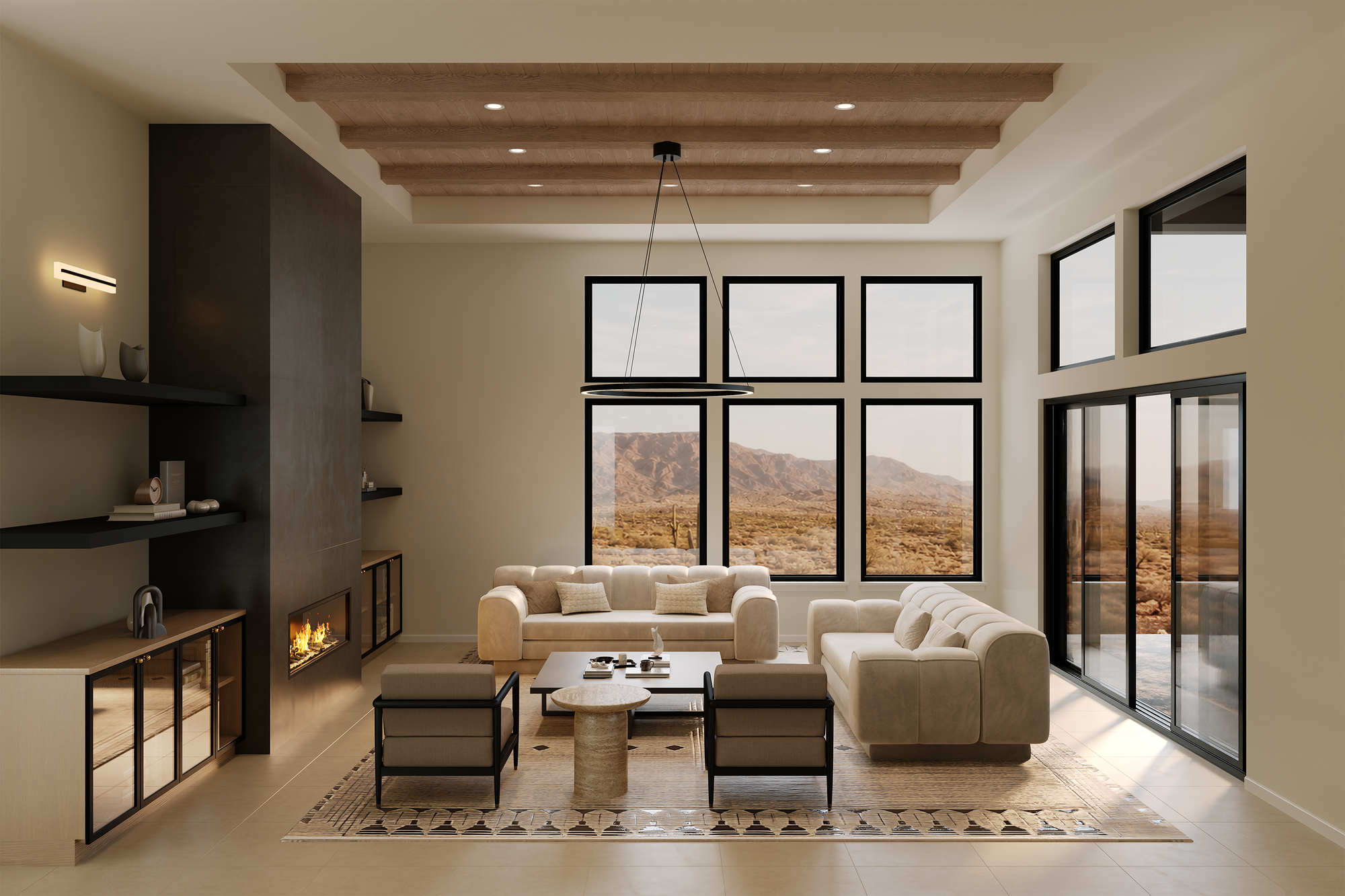
A top quality modern custom home builder can change the plan itself. Remove a wall to open the kitchen into the great room. Add a window on the western elevation to catch an afternoon view. Reconfigure a bedroom wing for aging parents or an adult child. Extend a covered patio because you want to enjoy the outside eight months of the year.
Adair offers more than fifty predesigned floor plans as starting points, and those plans are meant to be modified. If none of them fit, the Design and Build path is the alternative. Design your home from scratch with our in-house drafting team and watch your dream home come to life, working through concept development, revisions, and pricing review before anything is ordered.
The practical test when you are evaluating any builder is simple. Describe a structural change you actually want and ask whether it can be done, what it affects, and what it costs. The answer tells you very quickly how much flexibility is really on the table.
Quality Is Decided by the Parts You Never See
Finishes are what sell a model home. Longevity comes from everything behind them.
Windows, siding, roofing, plumbing fittings, and mechanical systems determine how a home performs in year fifteen, not just year one. A builder with decades of supplier relationships has consistent access to proven products and consistent installation standards across every home it builds. A builder that shops purely on the lowest bid each cycle does not.
Adair has been building since 1969 and works with long standing suppliers including Milgard, James Hardie, IKO, Kohler, Moen, American Standard, KitchenAid, Whirlpool, Shaw Floors, and Sherwin Williams. Those products come standard rather than sitting on an upgrade menu. That approach to product selection is part of why the company received the National Housing Quality Award.
When you tour homes or review specifications, look past the staging. Ask what window package is standard, what siding is used, what insulation values are specified, and what is included versus what is an added cost. Builders who lead with quality answer those questions readily.
Cost Clarity Before You Commit
Custom home budgets go wrong when the number quoted early is not the number that matters.
A base home price covers the structure. It does not cover clearing, grading, a well, a septic system, a long driveway, permit fees, engineering, or the finishes you actually want. If a builder never walks you through the difference, you will discover it later, and later is the expensive time to find out.
Adair builds toward a total project cost that accounts for the home, land or land payoff where applicable, site development, selected options, and other project costs. The property evaluation and site bids happen before you place the home order, so you are approving a complete picture rather than a starting figure.
Ask any builder you are considering to define exactly what their quoted number includes and what it excludes. The willingness to answer that in writing is more revealing than any brochure.
Trade Partners Who Answer to the Builder
No builder self performs every trade. Concrete, framing, plumbing, electrical, HVAC, roofing, drywall, and finish carpentry are specialized crafts, and the best results come from crews that do that one thing constantly.
The distinction that matters is accountability. A network of experienced trade partners working under a builder who schedules them, inspects the work, and owns the outcome is very different from a list of phone numbers handed to a homeowner. Adair coordinates its trade partner network and oversees the build from start to finish, with a Construction Superintendent responsible for the details on site.
Construction timelines depend on your state, your site, weather, and inspection schedules. Adair measures its build timelines from the point the foundation is poured, and those estimates vary by region rather than being a single national promise. Any builder quoting a guaranteed completion date before evaluating your property is guessing.
Experience That Has Been Tested
Longevity in homebuilding is not a vanity statistic. It means a company has built through interest rate swings, material shortages, labor shortages, and changing building codes, and is still standing behind homes it completed decades ago.
Adair has built more than 25,000 homes since 1969 across Arizona, Idaho, Oregon, and Washington. That volume produces something a newer company cannot manufacture: a repeatable process. Site evaluations follow a method. Cost reviews follow a format. Construction follows a sequence that has been refined across thousands of projects on thousands of different parcels.
Whether you are building a primary residence or a rental or resale property, that consistency is what keeps a complicated project moving.
Financing That Fits Construction
Construction financing is not a standard mortgage, and a builder that treats it as an afterthought creates problems.
Basis Home Loans is Adair's in-house lending partner and specializes in construction financing for Adair customers. Construction loans can be structured to combine costs such as land, site development, home construction, building permits, and closing costs into a single financing package rather than forcing you to arrange each piece separately. Terms, rates, and qualification standards change, so confirm current details directly.
Questions Worth Asking Before You Sign
Use these when you meet with any builder:
- Do you manage site development and permitting, or is that my responsibility?
- What does your quoted price include, and what is excluded?
- Can you modify the structure of this floor plan, and what does that change cost?
- Which products are standard rather than upgrades?
- Who is on site managing the trades, and how often will I hear from them?
- What construction financing options do you offer, and how do draws work?
Building on Your Land With Adair Homes
The best modern custom home builder for your project is the one that takes responsibility for the whole thing: your land, your permits, your plan changes, your trades, and your schedule. Adair Homes has been doing exactly that since 1969, managing site development, permitting, and construction so the project stays coordinated from the first property walk through to the day you get the keys.
If you own land or are looking at a parcel, start with a site evaluation and a conversation about what you want the home to do. That is where a custom home actually begins.

