Oregon protects its farmland more strictly than most states. That is good news for the countryside, but it changes the rules if you own or plan to buy farm-zoned land. A rural parcel that looks perfect for a custom home may or may not be approved for one, and the answer depends on how the land is zoned and the parcel's history.
This guide explains what to check before building on farm-zoned land in Oregon, so you can understand the approval process, avoid surprises, and plan your project with confidence. It is general information, not legal advice. Your county planning department has the final word on your parcel, and for complex situations a land use attorney or consultant can help.
What Farm-Zoned Land Means in Oregon
In most Oregon counties, farmland is zoned Exclusive Farm Use, often shortened to EFU. The purpose of the zone is to keep agricultural land in farming. Under state land use law, counties limit what can be built in these zones, and homes are allowed only in certain situations.
That makes building here different from building in a standard residential zone. On residential land, a home is usually allowed outright. On EFU land, a home often has to be approved through a land use process first.
Zoning names and details vary by county, and some counties use their own labels for farm zones. Always confirm how your parcel is zoned with the county planning department.
Check Whether a Home Is Allowed at All
The first and most important check is whether a dwelling can be approved on your specific parcel. Do this before you spend money on design, engineering, or site work.
Common Types of Dwellings in Farm Zones
County codes typically describe several categories. The exact names and rules depend on the county, but you may see:
- Farm dwelling: a home for someone engaged in farming the land, often with income or size tests
- Lot of record dwelling: a home on a parcel that has been owned by the same person or family since before a cutoff date set by state law
- Nonfarm dwelling: a home on land considered generally unsuitable for farming, which usually requires a conditional use review
- Accessory farm dwelling: housing for farm workers on an active operation
- Relative farm help dwelling: a second home for a relative who helps manage the farm
- Replacement dwelling: replacing an existing legal home
- Temporary hardship dwelling: temporary housing for medical or care needs
Each category has its own conditions, and some depend on farm income, soil quality, parcel history, or when you acquired the property. Whether your land is classified as high-value farmland also matters, since several dwelling types are more restricted on it. The planning department can tell you which options, if any, apply to your land.
Ask for a Written Answer
If you are weighing a purchase, ask the county about the dwelling options for the parcel before you close. A pre-application meeting or zoning verification can clarify what is realistic. Never assume that a past home on the land, or a neighboring home, means yours will be approved.
Understand the County Review Process
Because farmland is protected, approval usually involves a land use application reviewed by the county. Some applications are decided by staff, while others involve public notice and a hearing. Neighbors may have the chance to comment, and decisions with public notice can be appealed, which can extend the timeline further.
Plan for this step to take time. It happens before building permits, and building permits cannot be finalized until the land use approval is in place. Add this review to your timeline from day one.
What to Prepare
Applications often ask for a site plan, proof of ownership, and documentation showing how your proposal meets the code. Depending on the dwelling type, you may also need information about farm use, soils, or the history of the parcel. Having these documents organized helps the review move smoothly.
Check Your Water and Septic Options
Rural parcels often rely on a well and a septic system.
- Septic: Your county or the state will review the site for a septic system, typically with a soil evaluation. Soil that does not support a system can limit where the home can go. Septic permits generally also require a sign-off from county planning that the proposed use is allowed, so the land use question usually needs to be settled first.
- Water: If you plan to drill a well, confirm that groundwater is available and learn what is required in your area. Water rights and rules differ across Oregon, and some basins have limits.
Think about where the well, septic system, and drain field fit on the parcel. These need space and setbacks that affect where the home can sit.
Look at Access, Fire, and Utilities
Rural properties come with practical questions that affect both approval and cost.
Road and Driveway Access
Check that your parcel has legal access, and find out who maintains the road. Some properties rely on an easement. Your driveway may need to meet standards for width and emergency vehicle access, especially in areas with wildfire risk.
Wildfire and Defensible Space
Parts of Oregon have wildfire-related rules that can affect building materials, vegetation clearance, and site design. Ask the county or local fire district what applies to your parcel before you choose your plan.
Power and Other Utilities
Find out how far your build site is from the nearest power line and who provides service. Long utility runs can add time and work, so confirm early and plan them into your site layout.
Consider How Farming Rules Affect the Site
Farm zones are meant to protect working agriculture, so counties often pay attention to where a home is placed. They may prefer sites that keep productive soil in farming, cluster buildings together, or limit conflicts with neighboring farms. Some approvals come with conditions, such as an acknowledgment of normal farm practices nearby like noise, dust, and equipment use.
If you are not farming yourself, think about whether you are comfortable living next to working agriculture. It is part of the lifestyle, and it can affect your day-to-day experience.
How Adair Works With Rural and Farm-Zoned Properties
Adair builds custom homes on customers' land across Oregon, including rural and farm-zoned parcels. A site visit is a practical first step: our Site Services team evaluates your property with you, talks through your goals, and helps you understand what the site will require. After that, your Project Manager pulls together the estimated site development costs and jurisdictional requirements specific to your property.
Adair manages site preparation, trade coordination, and construction from start to finish, and we apply for permits on your behalf. Some specialized permits must be submitted by the property owner. In those cases, Adair helps you prepare them for submission to the local jurisdiction, so you are not starting from a blank page.
Adair does not determine whether a home site is buildable. Land use approval and buildability are decided by your county and other local jurisdictions, so confirm your dwelling eligibility with the planning department before you finalize your plans.
Design the Home Once Approval Is Clear
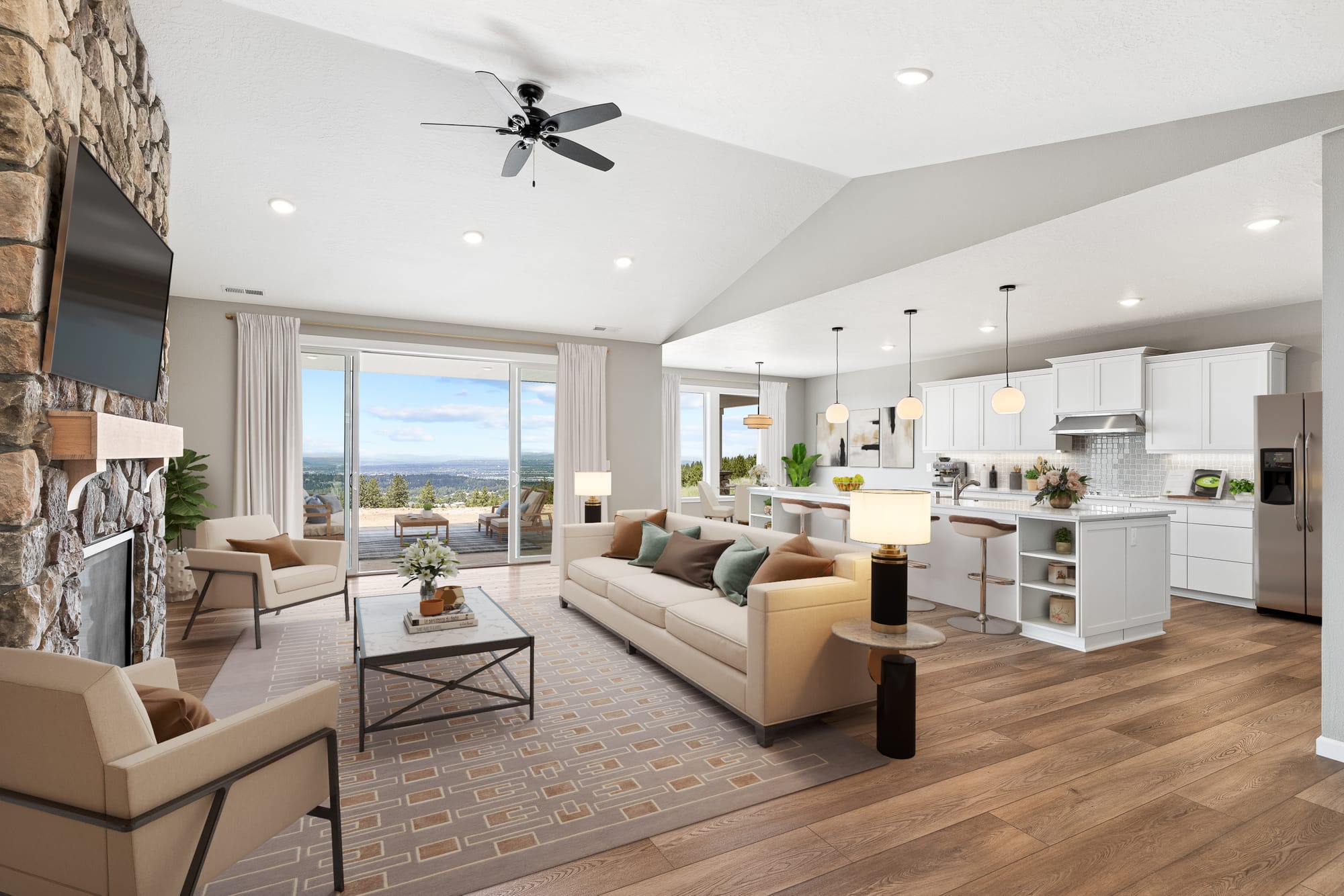
When your parcel is cleared for a home, you can design with confidence. Rural sites often have specific constraints, such as septic placement, setbacks from farm operations, or a narrow buildable area, so a home that fits the land matters even more.
You can start with one of Adair's more than 50 predesigned plans and personalize it at our Design Center, adjusting the footprint and layout to suit your site. Or, through Adair's Design & Build process, you can work with our in-house architect and design team on a custom concept shaped around your property's approved building area, then explore it in a full 360° 3D walkthrough before anything is built.
Timeline and Financing
Once the foundation is poured, Adair builds in Oregon typically take 6 to 8 months. Timelines are not guaranteed: weather, permitting, and the complexity of your home all play a role. The land use review that comes before permits is separate and can add significant time.
If you plan to finance your build, Basis Home Loans, Adair's in-house lending partner, can help align your financing with your plans. You are always free to choose any lender, and loan terms vary by lender and your financial situation.
Quick Checklist Before You Build
- Confirm your parcel's zoning with the county
- Ask which dwelling types, if any, can be approved, and whether your land is high-value farmland
- Learn the land use review steps, timeline, and appeal period
- Check septic soil and water source options
- Confirm legal access and fire requirements
- Locate the nearest utilities
- Schedule a site visit before finalizing your design
Start With a Site Visit
Building on farm-zoned land in Oregon takes more homework than building in town, but the right preparation makes it manageable. With more than 55 years of experience and 25,000 homes built across Arizona, Idaho, Oregon, and Washington, Adair knows how much a careful start shapes the rest of the project. Schedule a site visit and we will review your property, talk through your goals, and show you how we manage the process from developing your site to your final walkthrough.

